
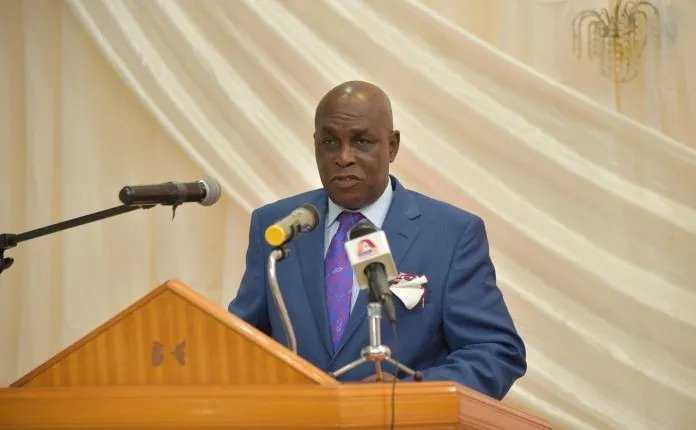
Labour expert Austin Gamey has defended the public sector pay adjustment, describing the 8% salary increase and an additional 1% allocation towards conditions of service as a gain for workers rather than a reduction in their pay.
Speaking with Bright Atobrah Awusi on Globe TV’s News Lens on Thursday, October 29, 2026, Gamey said the adjustment should be assessed against inflation and efforts to protect workers’ earnings from rising prices.
He also urged the media to broaden discussions about financial hardship beyond teachers and nurses, stressing that workers across both the public and private sectors face economic pressures.
Explaining the distinction between the national daily minimum wage and base pay, Gamey said the minimum wage is the lowest daily amount an employer is expected to pay a worker.
Base pay, he explained, refers to a worker’s basic salary, before other applicable payments are added. Using GH¢2,500 as an example, he said that amount would represent the worker’s existing base pay, to which the relevant salary adjustment would apply.
Asked what the adjustment would mean for teachers, nurses and civil servants struggling to meet monthly expenses, Gamey cautioned against presenting financial hardship as a concern limited to particular professions. “All of us are struggling. It’s not about teachers and nurses alone,” he said.
He noted that private sector employees, including media practitioners, also meet their living expenses within the same economy and should be included in conversations about wages and living costs.
Gamey said workers’ earnings should enable them to meet their monthly needs and, where possible, make savings. While individual spending habits influence how far salaries stretch, he stressed that sound economic management remains essential to protecting purchasing power. “The employer or the government, the state, must manage the economic situation well to enable inflation not to eat up your money,” he said.
Gamey rejected the suggestion that the adjustment amounted to a decrease in base pay, distinguishing between a lower rate of salary growth and an actual reduction in earnings. “There’s no decrease. On the contrary, there’s an increase,” he said.
He linked his assessment to what he described as progress towards single-digit inflation, citing a Consumer Price Index inflation rate of about 5.2%.
In his view, a salary adjustment of around 6% could have been justified against that inflation backdrop. He therefore described the negotiated 8% salary increase, together with the 1% allocation towards conditions of service, as a significant outcome for workers.
Gamey added that the extent to which earnings cover workers’ needs would depend on movements in the prices of goods and services, alongside how individuals manage their spending.
Leave a Comment