
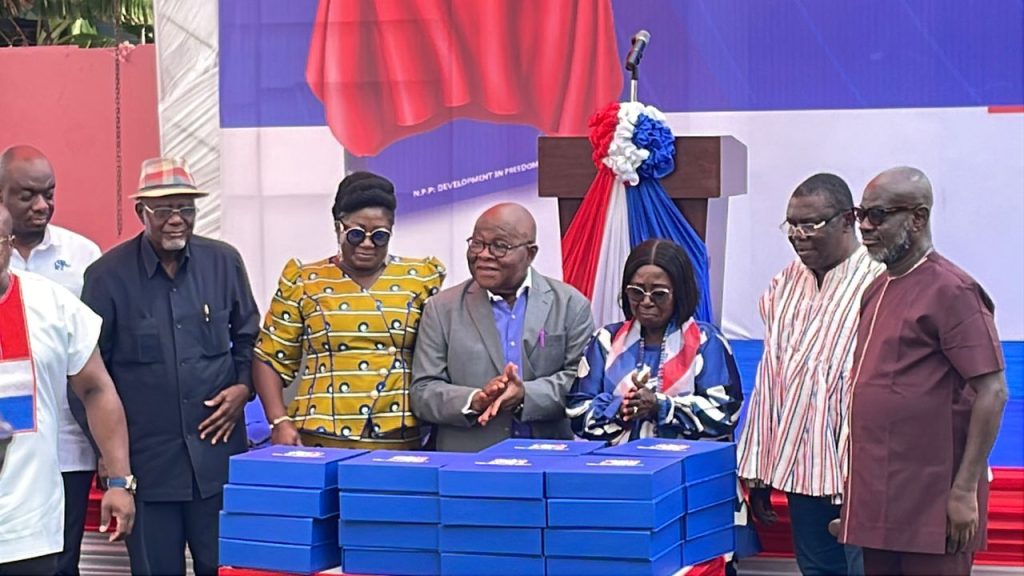
The New Patriotic Party (NPP) has officially unveiled a revised party constitution as part of an internal overhaul aimed at addressing shortcomings exposed by its loss in the 2024 General Elections. The launch took place on Wednesday, December 3, 2025, during a national event at which the party’s leadership outlined reforms aimed at restoring cohesion, strengthening internal democracy, and improving communication and grassroots mobilisation.
According to the party’s General Secretary, Justin Kodua Frimpong, the constitutional amendment is a strategic framework to tackle the core issues that contributed to the electoral defeat, notably “member neglect” and breakdowns in the party’s communication strategy.
In the aftermath of the 2024 electoral loss, the NPP established a constitutional review committee to examine weaknesses and propose reforms. That committee, chaired by Frank Davis, was set up in April 2025 to assess findings from an earlier review and draft amendments. A broader wave of internal reflection had already seen the party’s National Council of Elders propose a sweeping 59-point amendment plan to address structural weaknesses, internal democracy, and party discipline.
Other internal reforms in mid-2025, including a reorganization of party organs and a drive to deepen grassroots involvement, signalled that the constitution’s overhaul was a central part of the party’s recovery strategy.
Although full details of all changes have not been publicly disclosed, the party has announced several major structural reforms. These include separating specific internal party roles, such as Research Officer and Electoral Affairs Officer, across party levels, enabling specialization and clearer duties. Another major reform is expanding the Electoral College to select the party’s presidential candidate, aimed at increasing participation and inclusivity ahead of the 2028 elections.
Additionally, the party’s communications structure has been revised. Communication officers at all levels, from polling stations to the national headquarters, will now be elected rather than appointed. The party believes this shift will reduce perceptions of favoritism, strengthen accountability, and enhance its communication machinery.
Management of internal cohesion also featured prominently in the amendments, as the leadership admitted that neglect of grassroots members and weak feedback mechanisms contributed significantly to the 2024 defeat.
During the launch, Justin Kodua Frimpong called on party faithful to rally behind the renewed mission, emphasizing that the amended constitution should serve as a blueprint for unity and rebuilding the party ahead of future elections.
key reasons behind the party’s defeat.
By Bawa Musah
Leave a Comment