
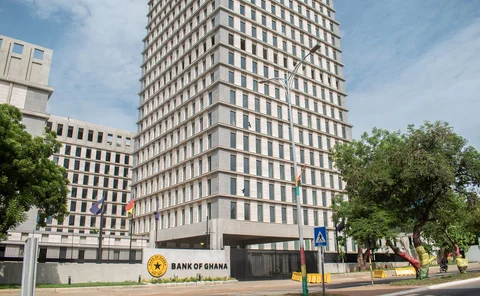
The Minority Caucus in Parliament has called on the government to immediately adopt a series of measures aimed at addressing what it describes as the worsening financial crisis at the Bank of Ghana (BoG).
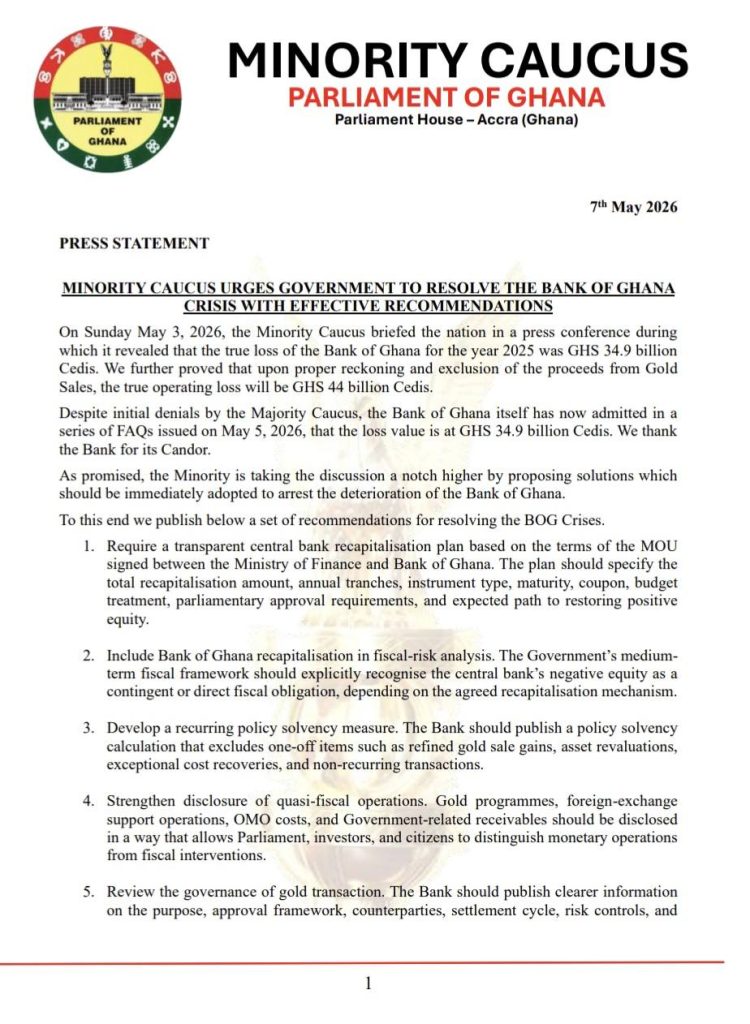
In a press statement dated May 7, 2026, the Caucus said the central bank’s financial challenges require urgent and transparent interventions to restore confidence and stability.
The statement follows an earlier press conference held on May 3, during which the Minority claimed that the Bank of Ghana recorded a loss of GH¢34.9 billion in 2025. According to the Caucus, the actual operating loss could rise to GH¢44 billion when proceeds from gold sales are excluded.
The Minority further claimed that the Bank of Ghana had subsequently acknowledged the GH¢34.9 billion figure in a series of Frequently Asked Questions (FAQs) issued on May 5, 2026.
“As promised, the Minority is taking the discussion a notch higher by proposing solutions which should be immediately adopted to arrest the deterioration of the Bank of Ghana,” the statement said.
Among the key recommendations outlined by the Caucus is the need for a transparent recapitalisation plan for the central bank, based on the Memorandum of Understanding between the Ministry of Finance and the Bank of Ghana.
The Minority also urged government to incorporate the recapitalisation process into the country’s fiscal-risk analysis framework and to publish regular policy solvency measures that exclude one-off gains and non-recurring transactions.
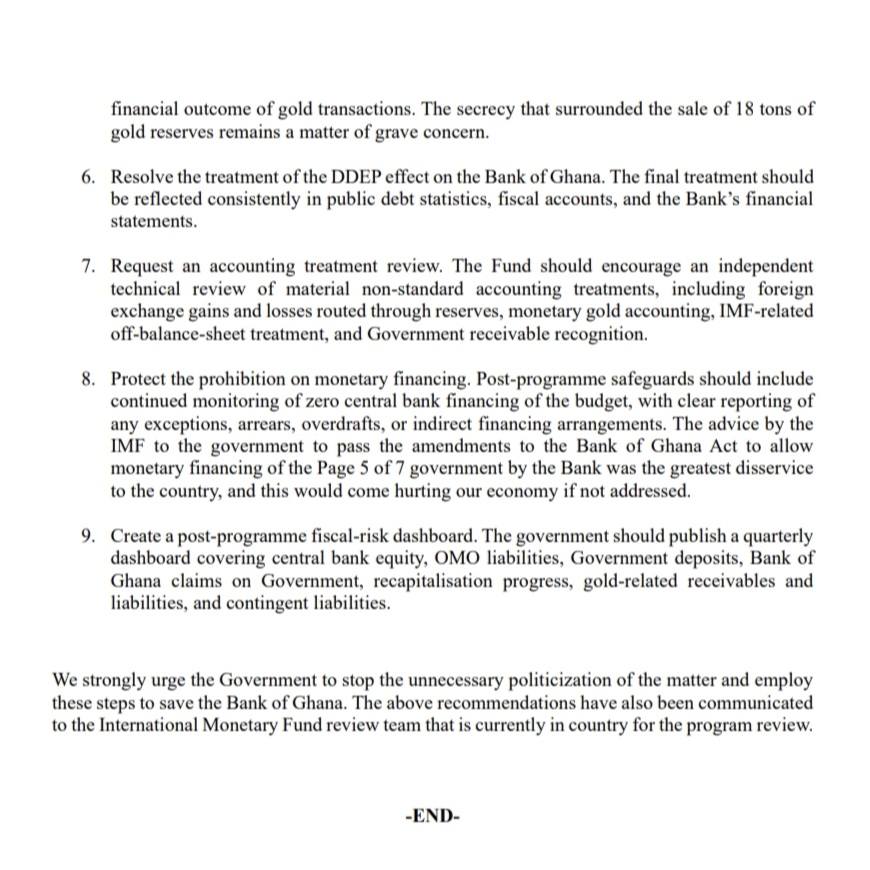
Additionally, the Caucus called for stronger disclosure of quasi-fiscal operations, greater transparency surrounding gold transactions, and an independent technical review of what it described as “non-standard accounting treatments.”
The statement also raised concerns over the treatment of the Domestic Debt Exchange Programme (DDEP) on the Bank of Ghana’s books and called for consistency in how the impact is reflected in public debt statistics and fiscal accounts.
On monetary financing, the Minority cautioned against any amendments to the Bank of Ghana Act that could permit central bank financing of government expenditure, describing such a move as harmful to the economy if not addressed.
The Caucus further proposed the creation of a post-programme fiscal-risk dashboard to provide quarterly updates on issues including central bank equity, recapitalisation progress, government deposits, and gold-related liabilities.
The Minority concluded by urging government to stop politicising the issue and focus on implementing practical measures to safeguard the Bank of Ghana.
It also disclosed that the recommendations had been communicated to the International Monetary Fund (IMF) review team currently in the country for programme assessment.
Leave a Comment