
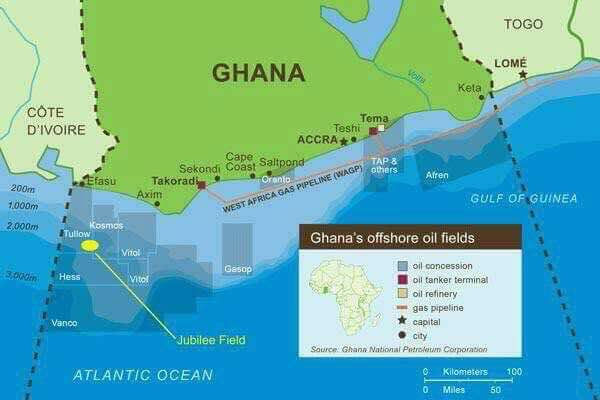
Ghana has formally notified the government of Togo of its decision to seek international arbitration to delimit the maritime boundary between the two countries.
In a statement issued on Friday, February 20, 2026, the government said the boundary would be determined through recourse to arbitration under the United Nations Convention on the Law of the Sea (UNCLOS).
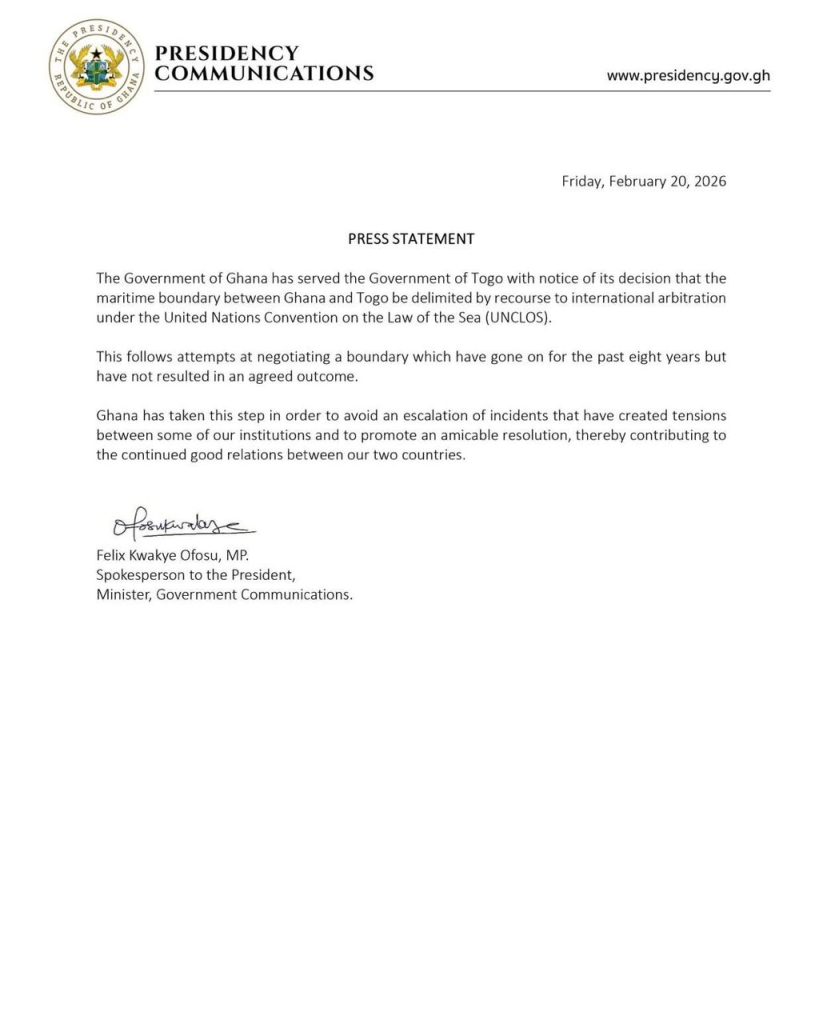
The Ghanaian government, in the statement issued, noted that the decision follows years of negotiations between Ghana and Togo, which have not resulted in an agreed outcome.
“Ghana has taken this step in order to avoid an escalation of incidents that have created tensions between some of our institutions and to promote an amicable resolution, thereby contributing to the continued good relations between our two countries,” the statement said.
The government stressed that the move is aimed at ensuring a peaceful and rules-based resolution of the matter while preserving the longstanding diplomatic ties between the two neighbouring states.
Background
A maritime boundary dispute between Ghana and Togo over offshore oil exploration began in December 2017 and May 2018, when Togolese authorities halted two Ghanaian seismic vessels conducting deep-sea data acquisition in an area near Togo’s waters.
Following the resolution of the impasse between Ghana and Cote d’Ivoire over maritime border demarcations, Togo has been claiming ownership of a maritime boundary that approaches that country.
The decision to refer the matter to arbitration under UNCLOS suggests Ghana is seeking a binding legal determination rather than continued political negotiation. UNCLOS provides a recognised framework for resolving disputes over maritime boundaries, territorial waters and resource rights, and has previously been used by coastal states to secure definitive rulings.
Maritime boundaries are particularly sensitive in West Africa, where offshore oil and gas reserves and fishing grounds carry significant economic importance. Although the statement did not reference specific exploration blocks or incidents at sea, the emphasis on avoiding escalation points to mounting practical and possibly commercial pressures.
The next steps will likely involve the constitution of an arbitral tribunal and the submission of legal arguments by both states, a process that can take several years before a final award is delivered.
Leave a Comment