
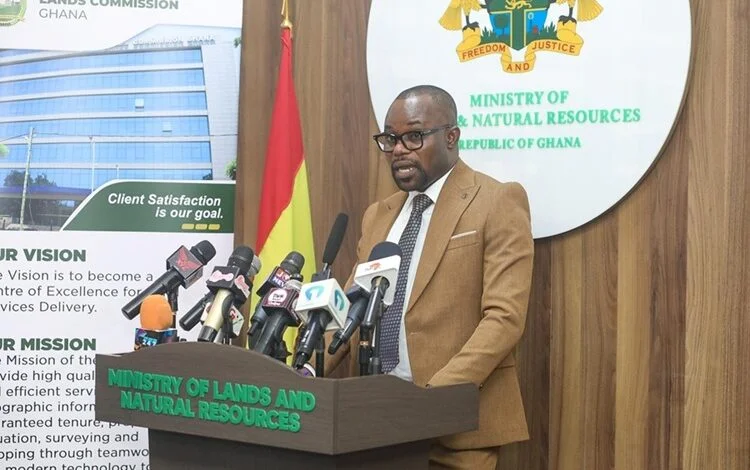
The Lands Commission is working with the Office of the Administrator of Stool Lands to review Ghana’s 1999 National Land Policy and develop a new framework that reflects current national priorities and addresses emerging land governance challenges. Speaking at a press conference on Tuesday, October 27, 2026, the Executive Secretary of the Lands Commission, Professor Anthony Owusu Ansah, said the review forms part of the institution’s commitment to supporting the government’s development agenda.
He outlined policy reforms, digital transformation, improved infrastructure and the decentralisation of land administration services as key areas of focus. “The Lands Commission remains committed to supporting the government’s development agenda through policy reforms, digital transformation, improved infrastructure, and the decentralization of land administration services” he said.
Professor Anthony reveals that the Lands Commission and the Office of the Administrator of Stool Lands are facilitating the review of the National Land Policy, which dates back to 1999. According to the Commission, developing a new National Land Policy is a government priority, with the review intended to ensure that the country’s policy direction responds to present-day land administration needs. “A primary government priority is developing a new National Land Policy to replace the existing one from 1999. The Lands Commission, under the auspices of the Ministry and in collaboration with the Office of the Administrator of Stool Lands, is facilitating the review process” he stated.
Professor Anthony stressed that an inception workshop was held on October 6 and 7, 2026, to gather stakeholder input to inform the drafting of the new policy. He added that further consultations are underway to incorporate perspectives from key actors across the land sector.
The Commission said it remained committed to ensuring that the resulting policy is inclusive, responsive and informed by the views of stakeholders.
Leave a Comment