
The Africa Trade Chamber has officially launched the 2026 Africa Trade Summit in Accra, setting the stage for a continental conversation on transforming Africa’s economic structure from a reliance on raw material exports to value-added industrialization.
The Summit — held under the auspices of the Ministry of Trade, Agribusiness and Industry and the Presidency is under the theme “Financing Africa’s Industrialization: Developing Industrial Value Chains, Beneficiation, and Market Integration.”
The gathering was intended to address one central question: how Africa can shift from its long-standing reliance on raw material exports to building industries, creating jobs, and driving shared prosperity across the continent.
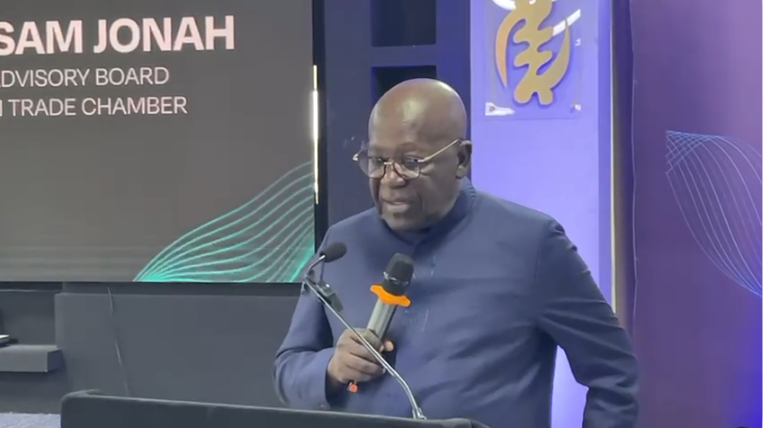
Sir Sam Jonah, Chair of the Advisory Board of the Africa Trade Chamber and Chancellor of the University of Cape Coast, underscored that Africa has spent over half a century exporting raw materials while importing finished goods — a cycle that has deepened joblessness and slowed development. He argued that the continent stands at a crossroads where honest reflection and bold decisions are urgently required.
According to him, Africa cannot prosper if it continues to fuel other economies while depriving its youth of jobs and economic security.
He noted:
“Every time we ship our raw materials and import finished products, we effectively export jobs and import unemployment. We cannot continue feeding other people’s factories while ours remain idle. When are we going to move from merely exporting what the world wants to producing what the world truly needs?” He questioned.

Sir Sam stressed that fundamental economic transformation does not occur in ministry conference rooms but in factories, industrial parks, and entrepreneurial ecosystems that operate consistently. He emphasized that while governments must provide predictability, stability, and rule of law, the private sector must take the lead in innovation, production, and regional value chain development.
Drawing from the experiences of South Korea, Singapore, and China, he called for long-term planning, disciplined policy continuity, and strong collaboration between states and businesses.
He stated: “Transformation happens through businesses, through factories running every day, through entrepreneurs solving problems, and through investors taking long-term bets. Government sets the stage, yes — but it is the private sector that must perform. Countries that industrialized placed discipline, consistency, and competitiveness above politics.”
The celebrated businessman added that no African country can industrialize alone, stressing that manufacturers require cross-border supply chains, harmonized regulation, reliable energy, efficient ports, and corruption-free institutions. He urged African leaders to sustain policies beyond elections and to resist the temptation to rely on raw material exports for quick revenue.
He highlighted successful examples in Morocco, Kenya, Namibia, Nigeria, Ethiopia, and South Africa, insisting that the continent already has proof that industrial transformation is possible.
He cautioned:
“The continent does not suffer from a shortage of plans — it suffers from a shortage of courage. Courage to enforce contracts, fight corruption, maintain policy continuity, and support local investors before foreign ones. We must choose the harder but more rewarding path: building industries, linking supply chains across borders, and empowering the African private sector.”
Sir Sam Jonah concluded with a call for Africa to imagine and build a new economic future — one in which the continent exports finished chocolate rather than raw cocoa, aluminum rather than bauxite, and electric vehicles built from African critical minerals. He insisted that the world will not wait for Africa, and Africa, too, must stop waiting.
The launch of the 2026 Africa Trade Summit marks the beginning of a multi-year drive to mobilize financing, strengthen industrial value chains, and deepen market integration as Africa works to unlock its full economic potential.
By Bawa Musah
Leave a Comment