
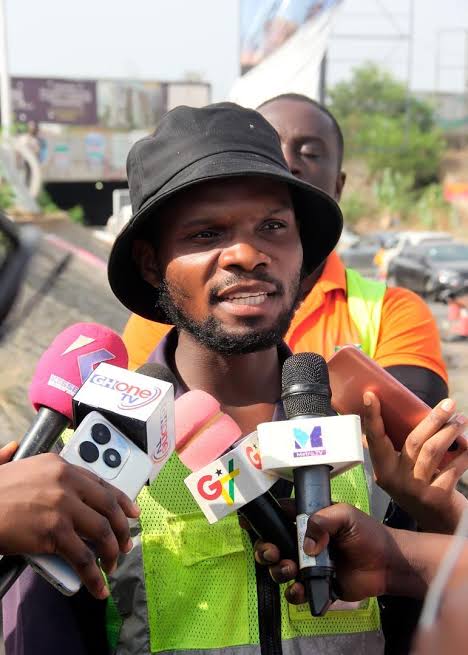
Buzstopboys Chief Executive Officer and environmental sustainability advocate, Heneba Kwadwo Safo, has called on the government and local assemblies to prioritise waste segregation and invest in recycling infrastructure as part of efforts to improve sanitation across the country.
Speaking on Globe TV’s News Lens on Monday, November 2, 2026, Sarfo stressed that separating waste at the point of disposal was essential to establishing an effective recycling system.
“Segregation is the foundation into recycling,” he said.
He proposed the installation of large, clearly labelled waste bins at strategic locations to allow residents to separate plastics, organic waste, paper and other recyclable materials.
According to him, waste collection and recycling must receive equal attention to ensure sanitation interventions translate into tangible improvements in communities.
Safo urged the government and local assemblies to demonstrate their commitment through sustained investment in waste collection infrastructure. He, however, cautioned that providing waste bins alone would not address the problem, stressing the need for authorities to ensure they are emptied promptly when full.
He also proposed the deployment of waste collection trucks with separate compartments for different categories of waste, including plastics, organic materials and textiles.
He explained that such vehicles would prevent materials already separated by households from being mixed during collection.
“When they go into the communities and the people are already doing the segregation, they don’t end up mixing everything that has been segregated into one big truck,” he said.
Identifying public education and inadequate logistics as major obstacles to effective sanitation management, Safo called for sustained public education to strengthen environmental awareness and promote responsible waste disposal.
He emphasised the need to educate individuals on the consequences of indiscriminate waste disposal, stating: “The polluter must be educated to understand the consequences of what they do.”
On logistics, he called for the modernisation of street-cleaning operations, arguing that authorities must move beyond an overreliance on manual sweeping.
“We need to modernise our sanitation system. We should be investing in street sweepers,” he said.
Safo further advocated investment in water tankers and pressure-washing equipment to improve street cleaning. He also called for increased tree planting and the greening of road medians to enhance the appearance of public spaces.
Touching on the use of plastic waste in the production of pavement blocks, Sarfo urged investors to adopt manufacturing processes that allow the finished products to be recycled at the end of their useful life.
He argued that designing such products with end-of-life recovery in mind would create further opportunities for recycling and reduce waste.
Safo maintained that lasting improvements in sanitation would require a coordinated approach involving public education, effective waste segregation, improved collection systems and sustained investment in recycling infrastructure.
Leave a Comment