
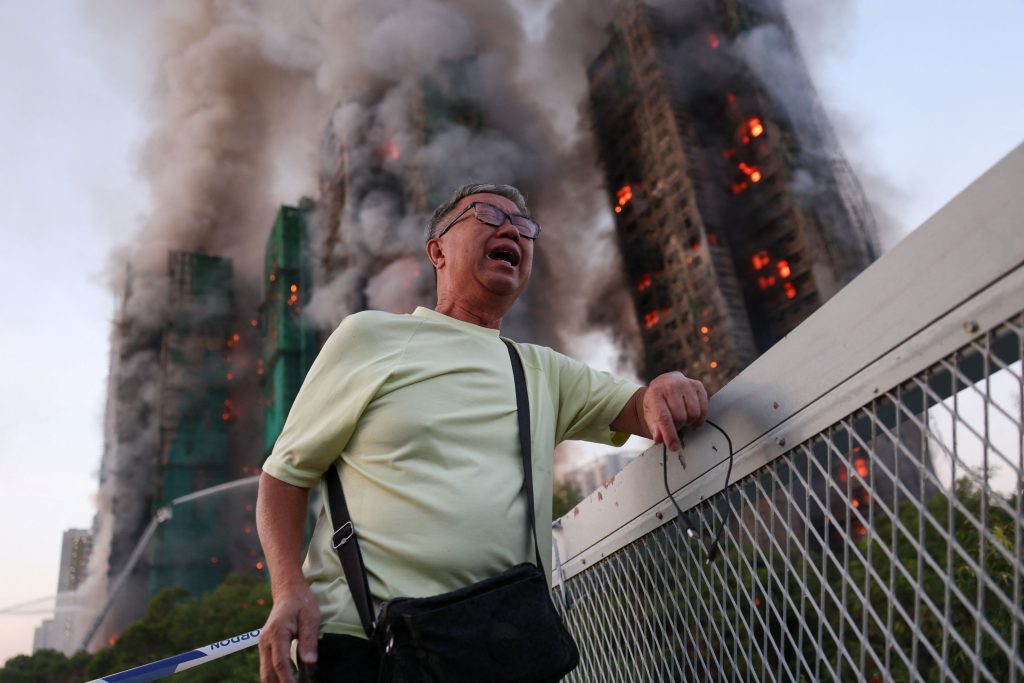
A devastating fire swept through Wang Fuk Court in Hong Kong’s Tai Po district on Wednesday afternoon, leaving at least thirteen people dead, dozens injured, and hundreds displaced in one of the city’s most tragic residential disasters in recent years. The blaze, which erupted unexpectedly, rapidly spread through several high-rise residential blocks that were undergoing external maintenance work involving bamboo scaffolding — a factor authorities believe may have accelerated the fire’s movement upwards and across adjacent structures.
Witnesses described scenes of chaos as thick plumes of smoke engulfed entire facades of the buildings, trapping residents inside their units and stairwells. Many were seen waving towels and flashlights from their balconies, desperately signaling for help as firefighters battled intense flames and falling debris. The speed of the fire’s spread overwhelmed emergency teams, who struggled to navigate narrow corridors, obstructed exits, and the heat funnel created by the scaffolding.
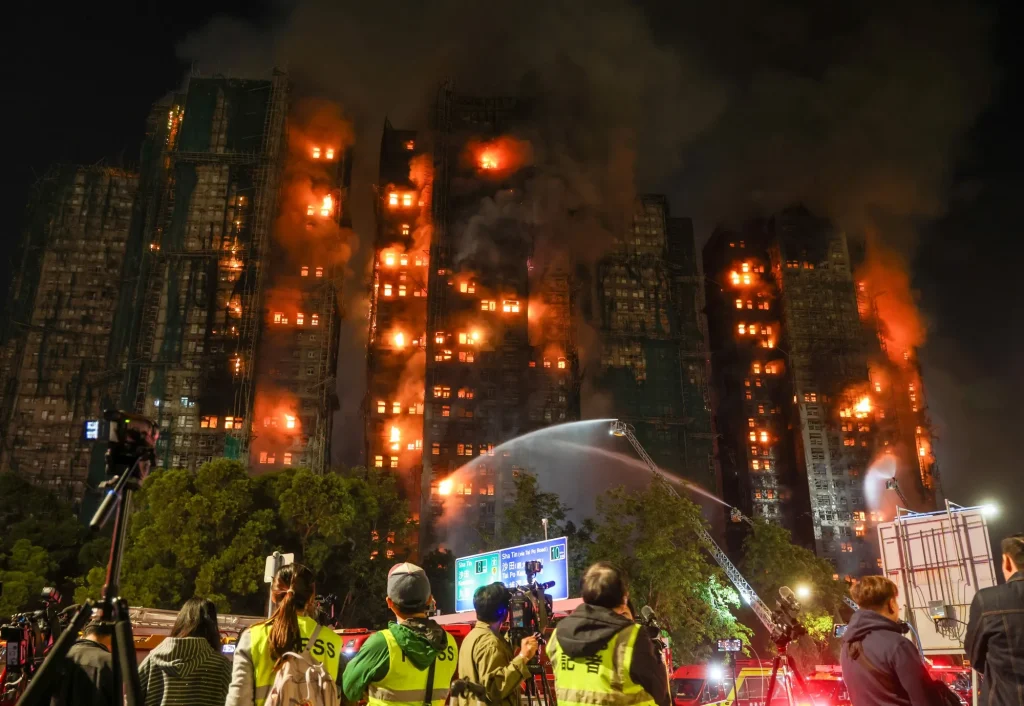
Residents reported hearing multiple explosions, possibly from air-conditioning units or gas lines compromised by the fire. Others recounted how alarms were slow to activate or inaudible on certain floors, complicating evacuation attempts and contributing to the panic that swept through the complex. Families searching for missing loved ones gathered at temporary relief centers set up by the government, while hospitals across the New Territories moved into emergency mode to treat the injured.
Hong Kong’s Fire Services Department confirmed that the blaze required one of the largest coordinated firefighting responses this year, involving hundreds of personnel, specialized rescue units, and high-rise firefighting equipment. Despite their efforts, authorities acknowledged that the combination of wind conditions, vertical scaffolding, and dense residential design made the fire exceptionally difficult to contain in its early stages.
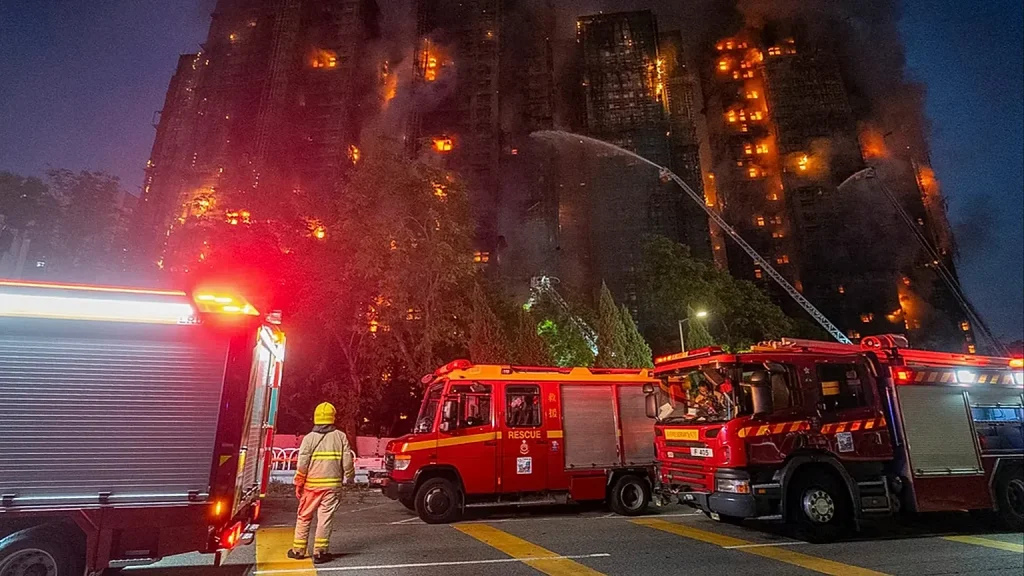
The tragedy has renewed widespread debate about building safety standards and fire preparedness in one of the world’s most vertically built cities. Urban planners, legislators, and safety experts are now calling for urgent reviews of scaffold-related regulations, emergency exit accessibility, and fire-resistant building materials. Community leaders have also urged the government to expand public education campaigns to ensure residents know how to respond quickly and safely during high-rise emergencies.
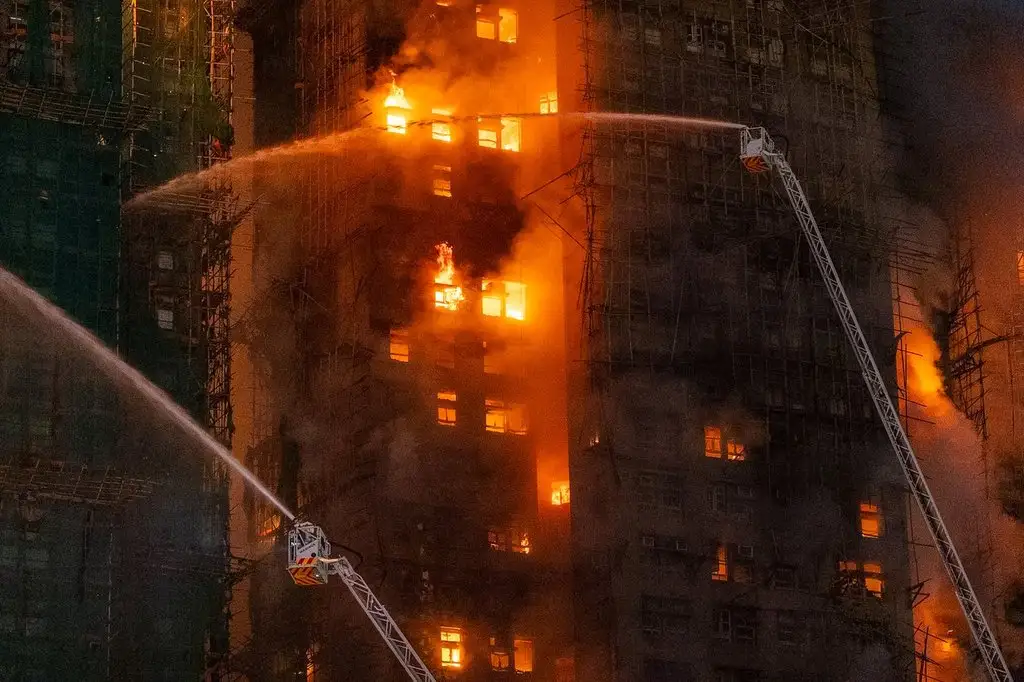
As investigations continue into the cause of the fire, Hong Kong mourns the lives lost and braces for potential reforms aimed at preventing such a catastrophe from happening again. For the survivors and affected families, the road to recovery will be long — but the city’s commitment to improving safety standards has now gained an undeniable urgency.
Leave a Comment