
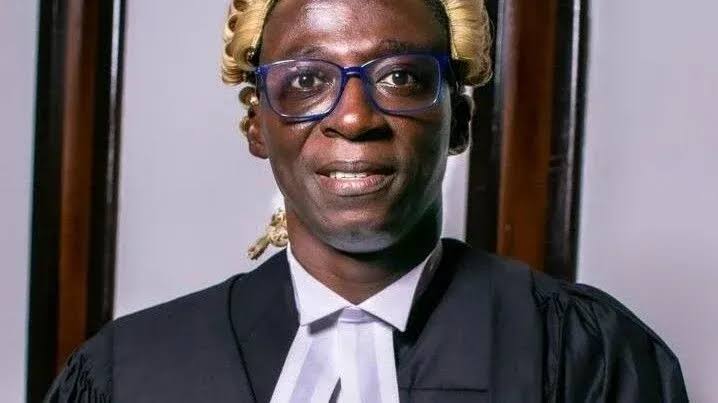
Private legal practitioner and policy analyst Austin Kwabena Brako-Powers has opposed calls for the Office of the Special Prosecutor (OSP) to investigate the alleged bribery scandal involving former Goldman Sachs banker Albert Essien Berko and AKSA Power Generation.
According to Mr Brako-Powers, the OSP’s previous involvement in the case, particularly its assistance to United States authorities, raises questions about why the anti-corruption agency did not itself investigate the matter when it had the legal mandate and opportunity to do so.
“Reading processes from the U.S. Court, I noted the OSP provided assistance to the FBI, leading to the successful conviction of Berko,” he said on TV3’s Big Issues on Tuesday, August 11, 2026.
“I’m asking myself: why didn’t the OSP investigate this matter? There is a legal framework that gives it the power to investigate such matters.”
He said he therefore does not support calls for the OSP to be tasked with investigating and, where appropriate, prosecuting persons who may have been culpable in the transactions involving AKSA and the Electricity Company of Ghana (ECG).
Mr Brako-Powers argued that the matter requires a comprehensive and independent investigation that goes beyond the alleged conduct of individuals directly connected to the transaction. He said the investigation must examine the roles and decisions of all public institutions involved in the process.
“We need a full-scale investigation of the matter, including the roles played by Parliament, PURC, GRIDCo and then the Power Ministry, and no one should be spared,” he stressed.
He said the investigation should establish how the AKSA power agreement was negotiated, scrutinised, approved and implemented, as well as whether the appropriate regulatory and parliamentary processes were followed.
Mr Brako-Powers also questioned the extent to which allegations of payments connected to government contracts should be treated as an isolated occurrence. He argued that the alleged conduct must be examined within the broader context of public procurement and corruption risks in Ghana.
“In fact, it is not new in this country for people to pay money to secure government contracts. Why are we surprised about this? It is happening in the country. Do you remember No.12 saga and P. C. Appiah Ofori’s allegations during the sale of Ghana Telecom?” he said, arguing that the revelations should prompt a broader examination of Ghana’s anti-corruption framework.
He further described the controversy as evidence of what he considers Ghana’s slow progress in combating corruption, particularly where public officials, state institutions and private interests intersect.
Mr Brako-Powers called for an investigation capable of identifying both individual culpability and institutional failures rather than focusing narrowly on prosecution.
“This is a classic evidence of our slow anti-corruption fight,” Mr Brako-Powers said, insisting that the objective should be to uncover the full chain of responsibility, strengthen institutional accountability and prevent similar controversies from recurring.
source: 3news.com
Leave a Comment