
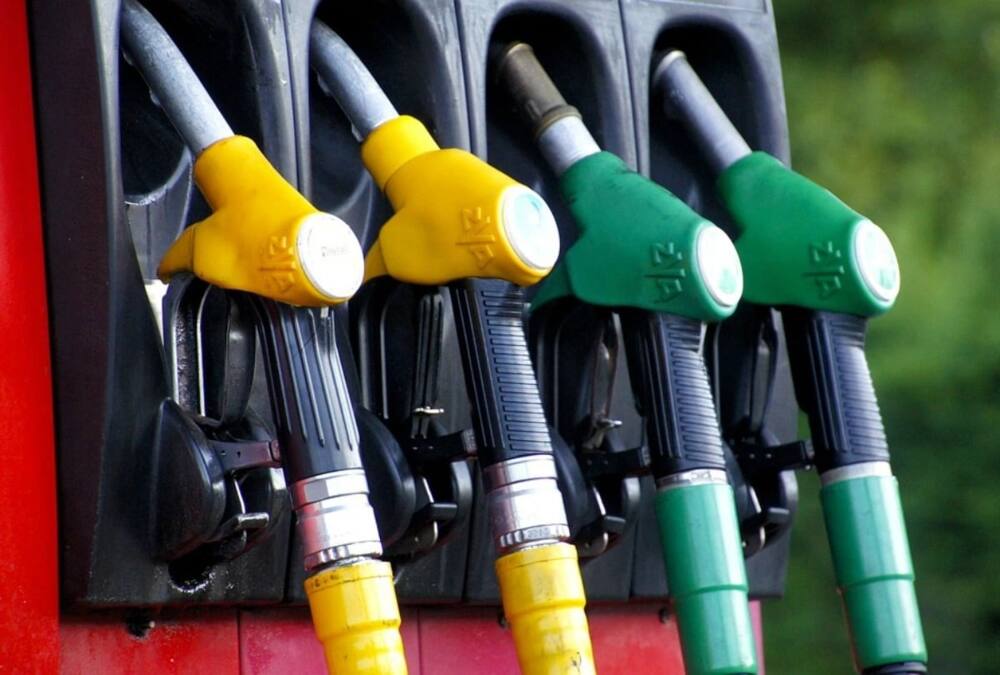
Fuel prices in Ghana could see a downward adjustment in the coming days following a sharp fall in global oil prices triggered by a peace agreement between the United States and Iran.
Oil prices dropped significantly in Asian trading on Monday after Pakistan, which has been mediating efforts to end the US-Iran conflict, announced a breakthrough deal that includes the reopening of the strategic Strait of Hormuz, a key global shipping route for crude oil and liquefied natural gas.
The development was reinforced by U.S. President Donald Trump, who announced on social media that the agreement would allow “the oil flow” to resume freely through the vital waterway.
Brent crude, the global benchmark for oil pricing, fell by about 4.8% to $83.18 per barrel, while U.S. West Texas Intermediate also declined by 5.6% to $80.13 per barrel.
The price drop on the international market raises expectations that Ghana’s fuel import costs could ease, potentially translating into lower prices at the pumps in the coming pricing window, depending on domestic market adjustments by oil marketing companies.
Pakistan’s Prime Minister Shehbaz Sharif said a formal signing ceremony for the agreement is expected to take place on Friday, June 19, in Switzerland. Iran’s Deputy Foreign Minister Kazem Gharibabadi also confirmed on state television that a deal with the United States had been finalised.
Energy analysts, however, caution that uncertainty remains over the full implementation of the agreement, which could keep global oil markets volatile in the short term.
Vandana Hari of Vanda Insights noted that the lack of detailed information on the deal could “inject unease and uncertainty into the market,” warning of continued price fluctuations over the coming week.
The Strait of Hormuz had been largely disrupted since the escalation of tensions following military strikes involving the United States and Israel earlier in the year. The waterway normally carries about 20% of the world’s oil and liquefied natural gas trade.
Experts also caution that even with the agreement in place, oil flows are unlikely to immediately return to normal levels. Industry consultant Andrew Lipow explained that mines in the waterway would need to be cleared and shipping backlogs resolved, a process that could take weeks or even months.
Despite the uncertainties, global markets reacted positively to the development. Asian stock markets surged on Monday, with Japan’s Nikkei 225 rising by 5.4% and South Korea’s Kospi climbing by more than 5.5%, as investors welcomed the easing of geopolitical tensions.
Energy markets have experienced sharp volatility in recent months, with crude oil prices swinging widely in response to developments in the conflict. Brent crude had previously surged to around $120 per barrel at the height of tensions, before easing back to about $70 prior to the latest escalation.
For Ghana, which relies heavily on imported refined petroleum products, the latest global price drop is being closely watched as a possible relief factor for consumers already grappling with high fuel costs.
Ghana’s economic recovery is gathering powerful momentum. The nation’s economy accelerated at a faster-than-expected pace in the opening months of the year, driven by a monumental surge in technology and a strong rebound in the industrial sector.
According to the latest provisional data released by the Ghana Statistical Service (GSS), real Gross Domestic Product (GDP) growth surged to 6.4% in the first quarter of 2026. This reflects a significant upward trajectory, rising from a revised 6.2% in the same period of 2025, and a marked acceleration from the 4.9% growth recorded in the first quarter of 2024.
Presenting the headline estimates, Government Statistician Dr. Alhassan Iddrisu revealed that the macroeconomic landscape is benefiting heavily from a combination of sustained expansion and sharply cooling inflationary pressures. A key highlight from the report was the sharp drop in the GDP deflator, which measures changes in the prices of all goods and services produced domestically, falling dramatically to 4.1% from the 23.9% recorded in Q1 2025.
In nominal terms, Ghana’s overall GDP for the first quarter of 2026 reached an impressive GH¢420.4 billion, climbing from GH¢378.0 billion in Q1 2025. Real GDP (at constant prices) stood at GH¢57.4 billion.
The non-oil sector demonstrated robust resilience, proving that the economic expansion is well-diversified beyond extractive resources. Non-oil real GDP grew by 6.3% year-on-year, pushing nominal non-oil GDP to GH¢410.9 billion.
The services sector retained its crown as the largest engine of the Ghanaian economy, expanding by 7.1% and accounting for nearly half (48.3%) of the overall GDP growth. This expansion was heavily turbocharged by the Information and Communication Technology (ICT) sub-sector, which recorded a staggering 25.2% growth rate—making it the fastest-growing sector nationwide. Transport and storage (13.0%) and retail trade (9.0%) also posted strong gains, though contractions in accommodation and food services (-13.6%) acted as a minor drag.
Concurrently, the industrial sector accelerated sharply to 6.9% growth, up from 4.1% in Q1 2025. This turnaround was underpinned by a major 10.7% rebound in Mining and Quarrying. Furthermore, the Oil and Gas sector staged a remarkable recovery, posting 7.0% growth compared to a severe 25.8% contraction recorded in the first quarter of the previous year. Both manufacturing and electricity sub-sectors logged stable growth rates of 6.2%.
The agricultural sector experienced a softer expansion, growing by 4.0% compared to 6.6% in the same period last year, although forestry and logging rebounded sharply by 9.0%.
As West Africa’s second-largest economy continues its steady climb out of its recent fiscal vulnerabilities, these Q1 figures provide major assurance to investors and international observers. With price stability returning and core industrial and digital infrastructure expanding rapidly, Ghana’s economic outlook for the remainder of 2026 remains highly optimistic.
Leave a Comment