
The Ghana Mineworkers’ Union has proposed a raft of reforms to strengthen local participation in Ghana’s mining industry while safeguarding workers’ welfare and job security.
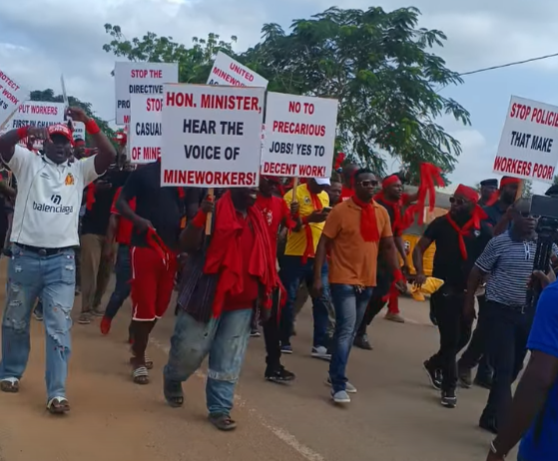
The proposals follow protests by members of the Union at Akyem Abirem against the government’s directive requiring mining companies to transition from owner-mining to contract mining by December 2026.
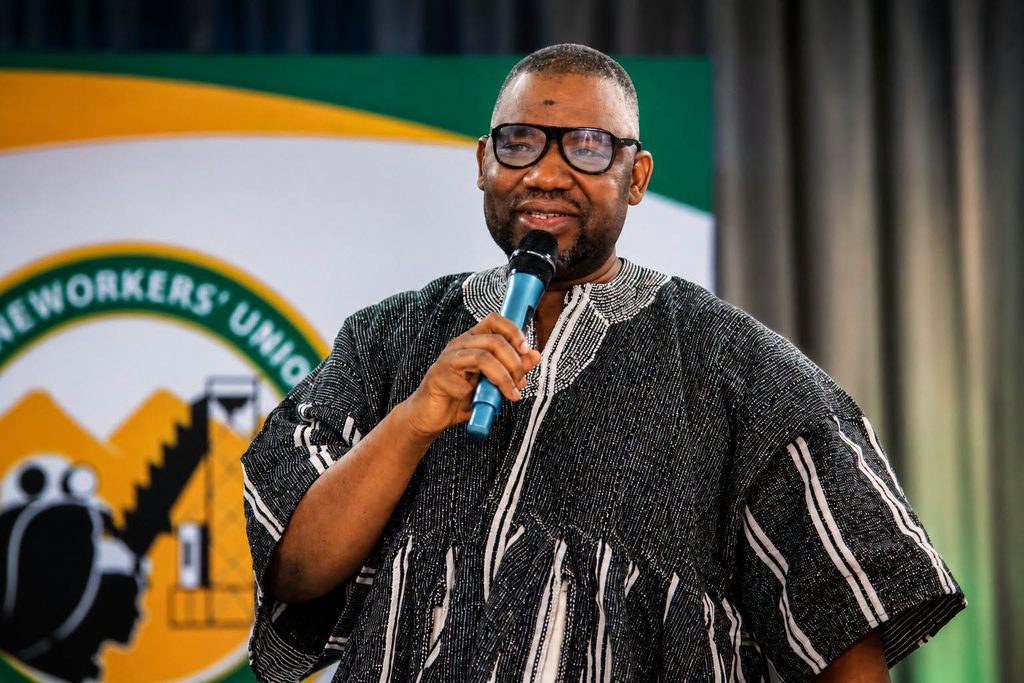
Speaking to Bright Atobrah Awusi on Globe TV’s News Lens on Friday, November 6, 2026, the Union’s General Secretary, Abdul-Moomin Gbana, said stronger corporate governance, public share ownership and improved tax compliance should form part of efforts to expand local participation in the mining industry.
He expressed concern about weak governance structures among local mining contractors, arguing that many operate as one-man businesses without effective oversight.
“Corporate governance is zero. They do not have boards of directors who ensure that these companies or businesses are properly managed. Most of them run virtually as one-man businesses,” he said.
Mr Gbana called for mandatory boards of directors and annual general meetings (AGMs) to ensure that shareholders can scrutinise management decisions and demand accountability.
“We expect that corporate governance would instil discipline and get most of these local contractors to begin to recognise that these are corporations. They are accountable,” he added.
The Union is also advocating the listing of local mining companies on the Ghana Stock Exchange (GSE) to broaden ownership and allow ordinary Ghanaians to acquire shares in the businesses.
“We believe that these local businesses should be encouraged, and if to some extent they have to be compelled, they have to be compelled to list on the Ghana Stock Exchange, so that it opens up for all of us to be able to acquire shares,” Mr Gbana said.
He argued that ownership of mining businesses should not remain concentrated in the hands of a few individuals.
“It shouldn’t just be the preserve of a few individuals at the expense of the rest of us,” he stressed.
On tax compliance, the Union’s General Secretary accused some local mining businesses of failing to meet their tax obligations, arguing that this limits the wider benefits Ghanaians derive from the country’s mineral resources.
“If you look at the records of most of these local businesses, they hardly pay taxes,” he claimed.
He said improved tax compliance would enable government to mobilise more revenue for national development, including the construction of roads and healthcare facilities in communities.
According to him, ordinary Ghanaians, including residents in rural communities, should also benefit from the economic returns of mining through government spending funded by tax revenue.
Mr Gbana maintained that accountability and compliance with corporate standards must be central to any effort to increase local participation in the sector.
“We believe that corporate governance is non-negotiable,” he said, adding that the proposed reforms would promote equitable participation in the mining industry and generate revenue to support the national economy.
The Union’s position comes amid growing debate over the government’s planned transition from owner-mining to contract mining and its implications for workers, local businesses and the broader mining industry.
Leave a Comment