
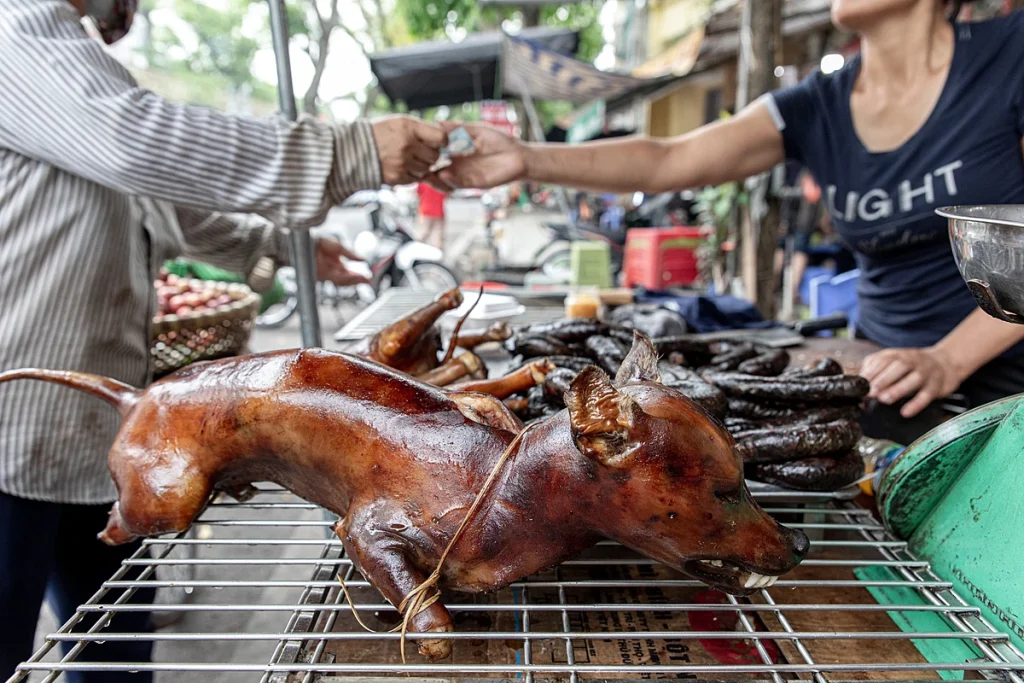
Cats and dogs play important roles in Ghanaian households. They provide companionship and emotional support to children and the elderly, and often serve as security animals for homes and businesses. While some view them as helpers and companions, others see them as a culinary delicacy.
The Institute of Community Sustainability (ICS) has called for a total ban on the consumption of these animals, warning that eating cat and dog meat poses serious health risks, diminishes the value of the animals, and undermines community bonds.
However, in Techiman, dog meat consumers and vendors insist there is no health risk associated with its consumption. “We have been eating dog meat for years, if it was unhealthy we would have been dead a long time ago”.
Yaw Dagarti, who has traded in dog meat for over three decades, says the business is a vital source of income for his family, and quitting would seriously affect their livelihood.
“This is our source of income, if I quit the trade right now I can I do any other work at my age”.
Former vendor Kofi Dery, who sold dog meat for decades to support his family, explains that ongoing calls for a ban and societal pressure forced him to leave the trade.”I have traded dog meat for 30 years and used the money to fund my children’s education, for four years now I have quit this trade due to the same calls and societal pressure”.
Rita, a pito vendor, notes that individual tastes and preferences vary, but she supports more public education on the health implications of consuming dog meat.”Every individual has their preferences so what I will encourage is that they should intensify public education on the health risks associated with eating dog meat if indeed there are any”.
While the debate continues, the Institute of Community Sustainability (ICS) reaffirms its mission to promote a sustainable, healthy, and compassionate Ghana. They are urging the media to amplify this message and are encouraging the public to actively support campaigns that protect both public health and animal welfare.
Leave a Comment